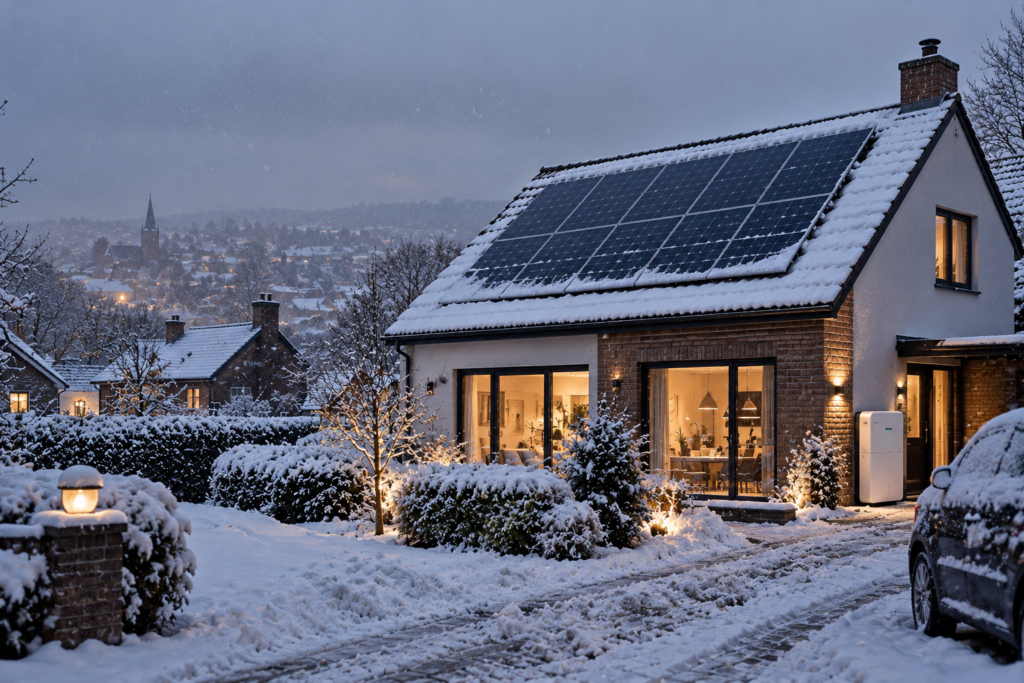
Yes, solar panels still pay off in the UK, but through the whole year rather than in winter. A typical 4kWp system makes about 116kWh in December, worth roughly £5 to £30, yet winter makes up only around 17% of annual output, while spring and summer deliver most of the savings.
Yes. Photovoltaic panels convert light into electricity, so they keep producing whenever there is daylight, including on cloudy days. Output drops because winter has fewer daylight hours (roughly seven to eight in December against over 16 in June) and the sun sits lower in the sky.
Cold is not the problem. Panels actually run more efficiently at lower temperatures. The loss in winter comes from less light, not from cold.
Figures differ by source because location, roof angle, shading and weather all matter, but they point the same way.
December output per kWp (south-facing)
About 29kWh
Postcode-based generation data
May output per kWp (south-facing)
About 119kWh
Same source
December as a share of the May peak
About 24%
Calculated from the above
4kWp system, December
About 116kWh
Calculated (29 × 4)
4kWp system, December or January
Roughly 55 to 110kWh
Another installer-data estimate
Share of annual output, Nov to Feb
About 17%
Installer analysis
Share of annual output, Apr to Sept
About 65 to 75%
Installer and supplier estimates
Dec to Feb as a share of summer monthly output
Roughly 10 to 30%
Range across several supplier guides
Some installers quote higher winter figures for a 4kW system, in the 200 to 300kWh range. The spread comes from differences in region, roof pitch and the weather in the months measured. Use your own installer’s written performance estimate for your roof.
For context, a 4kWp UK system typically generates around 3,400 to 4,200kWh across a year.
At the October to December 2026 price cap of 26.32p per kWh, 116kWh in December would be worth about £30 if you used all of it. Exported electricity earns far less. Fixed export rates are often in the low single digits up to roughly 12 to 16p, so the same unit might be worth £5 to £15.
So December’s contribution is real but small, roughly £5 to £30. Across a full year, the same 4kWp system in a worked example (3,800kWh, 35% self-use, 4p to 12p export) is worth around £450 to £645. Winter is a small slice of that, which is why judging solar by its December performance gives a misleading picture.
For a typical household, the Ofgem cap puts the annual bill at £1,723 for October to December 2026. Solar will not remove it, but it reduces it every month.
Because your demand peaks when your generation is lowest. You use more electricity for lighting and heating in the evening, when panels produce nothing. That is why winter bills still rise even with solar. It is a seasonal mismatch, not a fault.
You do not have to wait for summer. A system installed in autumn starts saving from the day it is commissioned, and you give up only a modest amount by not waiting until spring. See our guide on whether autumn is a good time to install.
If money is tight this winter and you receive a means-tested benefit, also check the Warm Home Discount, which gives a one-off £150 off your electricity bill.
Not in the winter months on their own. It pays off across the year. Winter is the low point, summer does most of the work, and the 25-year panel warranty means most of the lifetime value comes after the payback period. Judge the system on annual output and your annual bill, not on December.
The fastest way to see what a fair local price looks like is to compare several vetted quotes for your own roof. SolarForYou lets you compare quotes from MCS-certified installers in your area, so you can judge price, warranty and system design together before you commit
Yes. Solar panels run on daylight, not heat, so they generate in every UK month. A typical south-facing system makes about 29kWh per kWp in December against around 119kWh per kWp in May, so winter output is roughly a quarter of the May peak.
Roughly 55 to 120kWh in December or January, depending on location, roof angle and weather. Some installers quote higher figures, so ask yours for a written monthly estimate for your roof.
Around 17% of annual output arrives between November and February, while roughly 65 to 75% is generated between April and September. December and January are the lowest months.
Yes, if the timing suits you. The system starts saving as soon as it is commissioned and will be ready before spring. Installing in winter can also mean a quieter installer schedule, though that varies. Deadlines such as the 31 March 2027 end of 0% VAT matter more than the season.
Cold actually helps efficiency, and snow is rarely a long-term problem on a pitched roof. Panels that are fully covered will not generate until the snow slides off, which usually happens quickly once the sun appears.