Choosing a solar panel company in the UK comes down to four checks: MCS certification (verified on the register, not just claimed on their site), a workmanship warranty of at least two years, a strong volume of independent reviews rather than just a high score, and a fully itemised quote. Get this right and panel brand becomes a secondary decision.
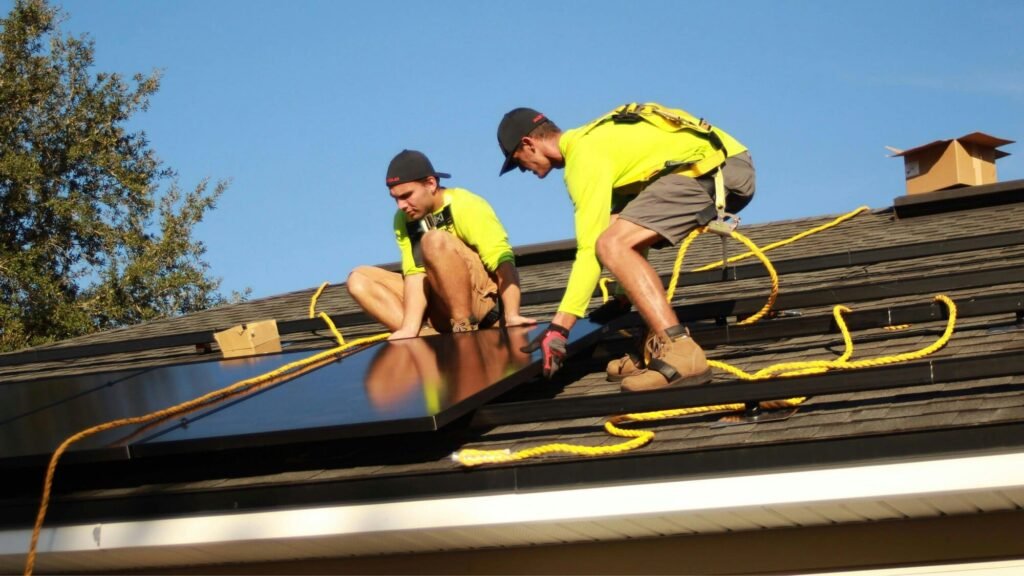
A solar system is a 25-year investment, but almost everything that can go wrong with it — roof leaks, poor cable runs, incorrect system sizing, a voided warranty from bad wiring — traces back to installation quality, not the panels themselves. Two identical panel and inverter specs, fitted by two different companies, can perform differently for decades because one team designed around the actual shading on the roof and the other didn’t.
That’s why the single most important decision in a solar purchase is who installs it, not which panel brand appears on the datasheet.
The Microgeneration Certification Scheme (MCS) is the UK’s standard accreditation for solar installers, and it matters for two concrete reasons: it’s usually required for any current or future Smart Export Guarantee tariff, and many home insurers expect it for solar-related claims. Don’t take a “MCS certified” badge on a website at face value — installer status can lapse or change. Check the live MCS register yourself before signing anything.
These add a consumer-protection layer on top of MCS: a code of conduct, a complaints process, and in RECC’s case, deposit protection if a company goes under mid-project. Worth asking about directly if it isn’t mentioned upfront.
This is distinct from the panel’s product warranty (usually 25 years, covered by the manufacturer). The workmanship warranty covers the quality of the *installation* — the roof penetrations, the wiring, the mounting — and it’s the installer’s own promise, not the manufacturer’s. Two years is the bare minimum credible companies offer; several UK installers now offer five to ten years, and it’s a legitimate differentiator worth asking every company you quote to state clearly.
A 4.8 rated average built on 40 reviews and a 4.6 rated average built on 4,000 reviews are not equally trustworthy — the smaller sample can be skewed by a handful of friends-and-family reviews or a single bad week hidden by low volume. Look at both the score and the count, on more than one platform (Trustpilot, Google, Checkatrade), and read a sample of the most recent reviews rather than just the highlighted ones.
A trustworthy quote breaks down panel brand and wattage, inverter brand and type, scaffolding, electrical certification (including DNO notification), and any finance charges separately. A single lump-sum figure with no breakdown makes it hard to compare quotes honestly and makes it easier for hidden costs to appear later.
National brands (often backed by an energy supplier or large group) typically offer strong brand recognition, established finance options, and consistent processes across regions — but coverage sometimes means subcontracted installation teams, so ask directly whether your install will be in-house or subcontracted.
Regional and local MCS-certified firms, often carry excellent, tightly-clustered review scores because they depend entirely on local reputation, and they can offer more flexibility on scheduling and site visits — but their workmanship warranty and finance options may be more limited, and coverage is obviously geography-bound.
Neither category is inherently better. What matters is whether the specific company clears the checklist above.
MCS certification
Required for SEG eligibility and most insurance claims
MCS register — search by company name
RECC / TrustMark
Consumer protection, deposit protection, complaints proces
Ask directly; check the relevant register
Workmanship warranty
Covers install quality, separate from panel warranty.
Get it in writing in the quote.
Review volume + score
Score alone can mislead at low sample sizes.
Trustpilot + Google, check recency.
Itemised quote
Lets you compare like-for-like and spot hidden costs.
Ask for a full line-item breakdown.
Even among fully MCS-certified, well-reviewed companies, pricing for a near-identical system can vary by 20–30% for reasons that have nothing to do with quality — overheads, regional demand, or simply how busy that installer is that month. The single highest-leverage thing you can do isn’t finding the one “best” company; it’s comparing multiple vetted quotes side by side so you can see what a fair price actually looks like for your specific roof and system size.
MCS verified , Free, no obligation, no charge to unlock quotes. Tell us about your property once and we will match you with up to three certified installers in your area.
Search the official MCS register by the company’s trading name or registration number. Don’t rely on a certification badge shown on the company’s own website, as it can be out of date.
Two years is the baseline offered by credible installers. Several established UK companies now offer five to ten years, which is worth prioritising when comparing quotes.
Neither is automatically better. National companies often offer stronger finance options and brand consistency; local installers often have tightly-clustered strong reviews and more scheduling flexibility. Check MCS status, warranty length and review quality for either.
At least three from MCS-certified installers. Price for a near-identical system can vary by 20 to 30 percent between reputable companies for reasons unrelated to quality.
Pressure to sign on the day of a home visit, especially paired with a “discount expires today” pitch. Reputable installers don’t need same-day pressure to close a sale.